A Review of Virtual Escape Rooms
by Kyan
The idea of a virtual escape room sounds like a concept that arose during the pandemic, when people were physically trapped in their rooms. However, the opposite is true – physical escape rooms were originally inspired by virtual ones, at least in part. Using simple point-and-click gameplay, developers design intricate mechanisms and find ways to simulate the atmosphere of being trapped.
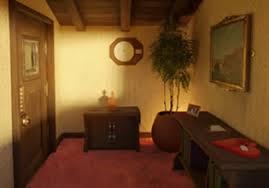
As someone who has always enjoyed more conventional puzzles, escape room-styled puzzles are a welcome change of pace. After all, they are essentially chains of puzzles linked by one larger meta-puzzle. The focus shifts from merely applying logic and deduction to obtain a solution, to exercising one’s lateral thinking to figure out what even needs to be solved in the first place.
An example would be the game Escape Simulator, which contains several themed, highly interactive escape rooms, but the main draw is certainly the thousands of community-created rooms that its editor supports. Personally, a significant part of the appeal of puzzles is thinking about constructing your own so a user-friendly platform to do so is always welcome. There are also short, free escape room-styled puzzle games out there, designed as a mini-puzzle that can be completed in under an hour. such as “lodge” by Colorbomb, which provide a brief single-player experience (though it could still be fun with a group).

A snapshot of Escape Simulator’s room editor
If you’ve been to a physical escape room, it seems like attempting one of these solo without the ambience and ability to touch physical objects completely defeats the purpose, but I would say it is simply a different experience. With virtual puzzles there is no time limit, no risk of breaking something, and potential for many interesting mechanisms that are nearly impossible to build in real life. For example, creators can experiment with the multitude of ways one can open a door, unrestricted by the need to design the mechanism of the lock.

How would you build this in a physical room? (taken from puzzle game The Witness)
Virtual escape rooms also don’t necessarily detract from the teamwork-based aspect that is often part of the appeal of a physical escape room. It still can be fun to attempt the puzzles with someone else, just as solving a crossword or sudoku puzzle cooperatively with someone else doesn’t make it less satisfying. There are also puzzles centered around being separated, where two people play separately and communicate only by text, such as Alone Together by Enchambered, similarly to physical rooms where participants are asked to split into smaller groups with limited communication. Additionally, this allows you to play from anywhere, including with someone on the other side of the world.

Two sides, separated, with different roles
I think the fact that you can have a similar escape room experience with unlimited time to explore can be quite comforting, and you have the option to watch a walkthrough to circumvent the inevitable flaw of these types of games, which is that sometimes there is no choice but to click on every pixel in hopes that you find the right spot that can be interacted with. To me it doesn’t diminish the effect of the puzzle but rather allows you an “escape route” to access the next part of the puzzle. Like requesting a hint in a physical escape room, except here, you are not under any pressure to do so to experience the rest of the puzzle.
Then, when you finally reach the end, there is a way to share this experience with others, and have others tell you all the alternative paths to the finish. And despite the sense of accomplishment you may feel, if you bother returning to try again with knowledge of the solution you realise how obvious it actually was. Seeing how much room for improvement you have can often be quite motivating.
If you enjoy puzzles that require more lateral thinking, or if you are into similar concepts like puzzle hunts, I recommend trying out some short virtual escape rooms, or even trying your hand at creating one. I still believe that designing puzzles is half of their appeal, so I suppose that would be something to add to an ever-growing bucket list.
 nushpress